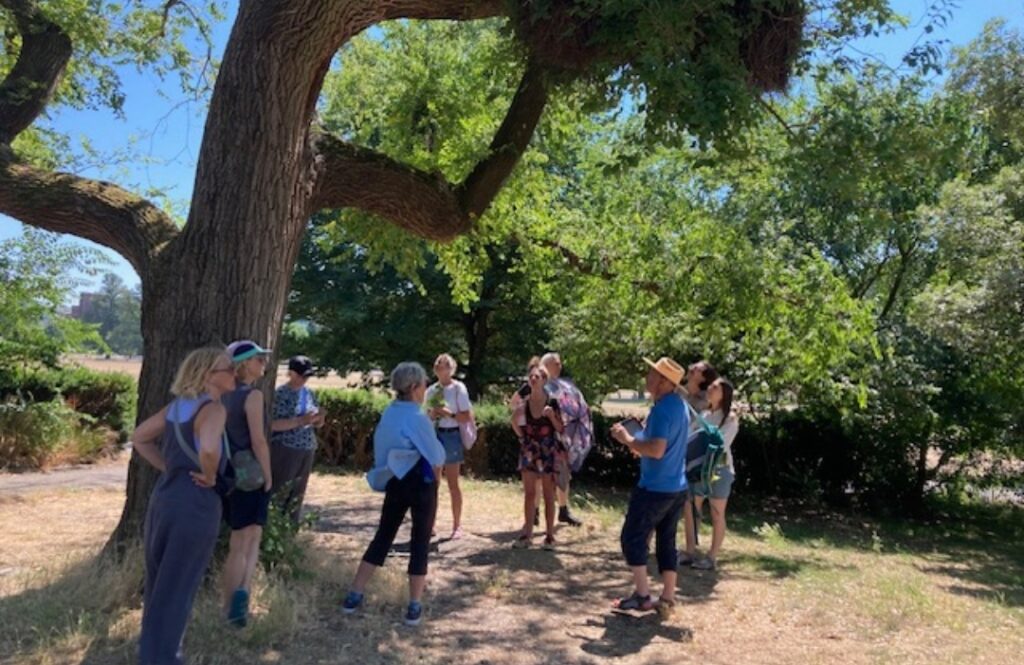
On a sunny and very hot afternoon around ten people were led by Alister Peters, expert arborist, on a very interesting and enjoyable walk to look at many of the different trees in Preston Park.
We started at the northeast corner of the Rose Garden by a tall elm and green and purple beeches. The chalky soil and salty air of Brighton do not provide conditions in which many native trees will thrive, the notable exceptions being elms and sycamores, both of which were planted by the Victorians throughout the city.
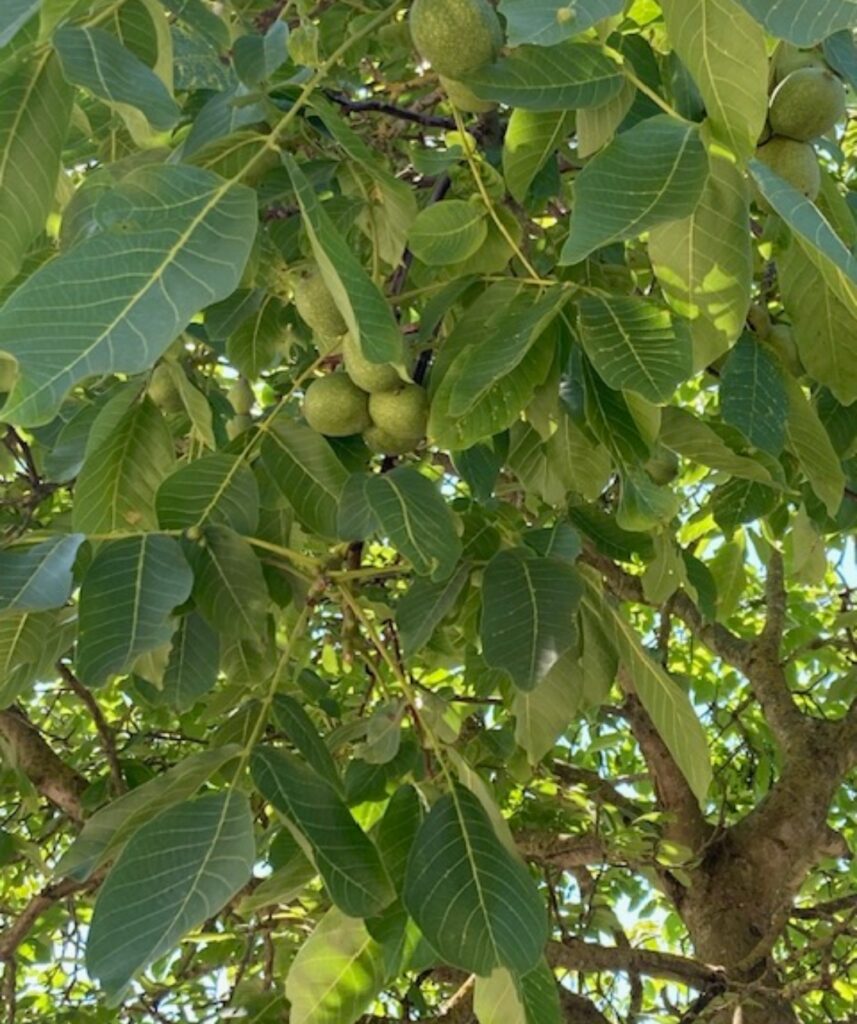
Just north of the Rose Garden a clump of trees includes a purple-leafed plum. It flowers in late January and is a good choice for smaller gardens. Nearby is an acacia, a tree that bees love, and a black mulberry that was already producing fruit. We stopped to look at a common walnut and a black walnut, and a sweetgum that is beautiful in the autumn when its leaves turn red and purple.
Approaching the Chalet Café we came to a very large elm that is only 50 years old. It is one of the numerous different types of elm in the park, some of which have been bred to be resistant to the elm disease that has been decimating elms in the UK since the 1970s. Many trees have been destroyed in Preston Park but the surviving trees can now be vaccinated every April/May.
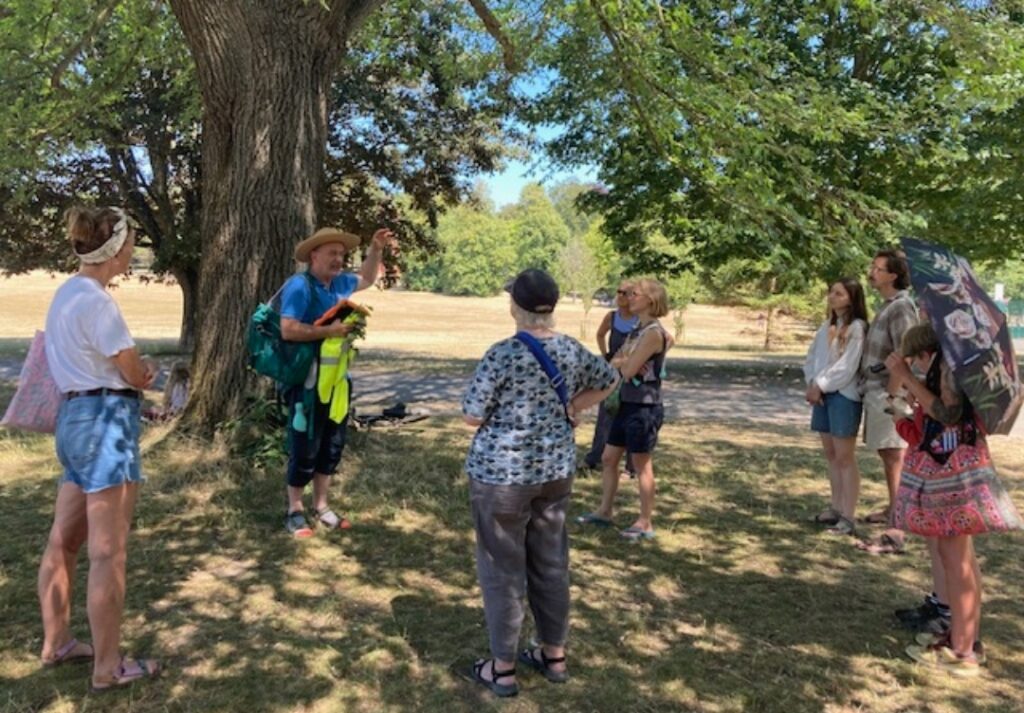
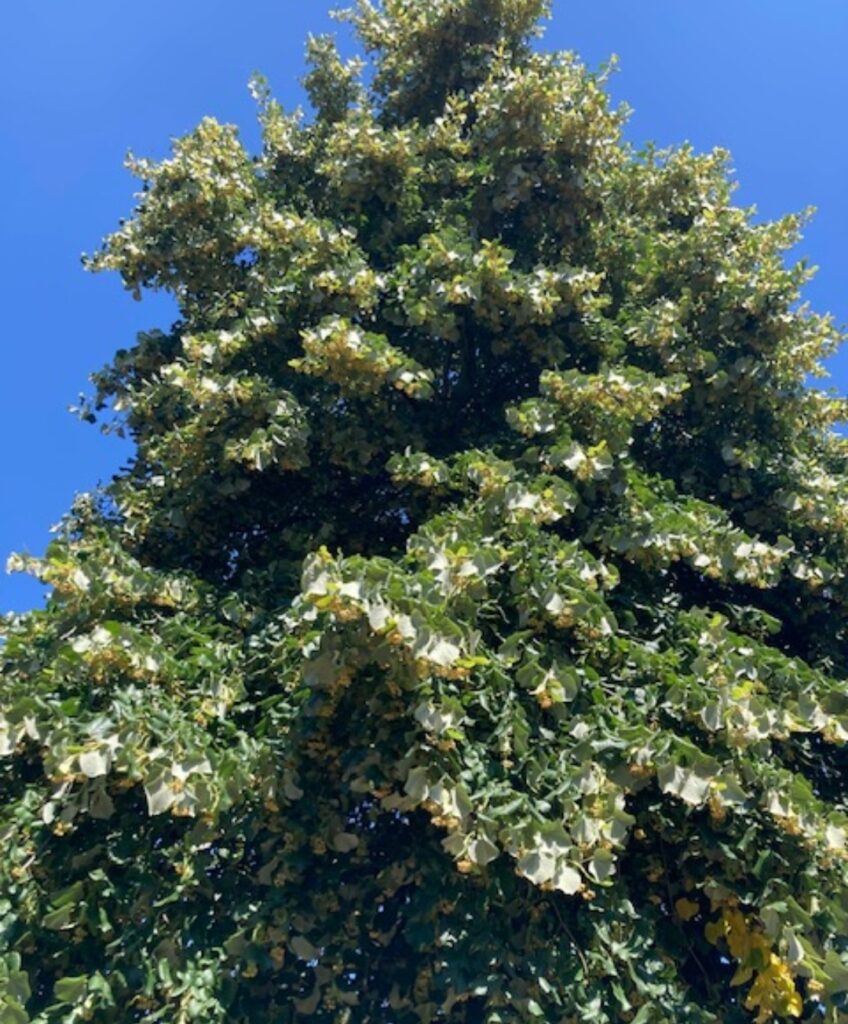
Among other trees of interest on our walk were a silver pendant lime and a plane tree. The latter is a tree that can grow to a height of well over 135 feet and, very unusually, can cope with temperatures of up to 45 degrees centigrade. The park also has a few of the approximately 800 varieties of oak tree, including the Turkey (which thrives on chalk) and Hungarian, and one English.
Our walk ended at the black mulberry tree in the Walled Garden, soon to be laden with berries like its companion near the start of our walk.